

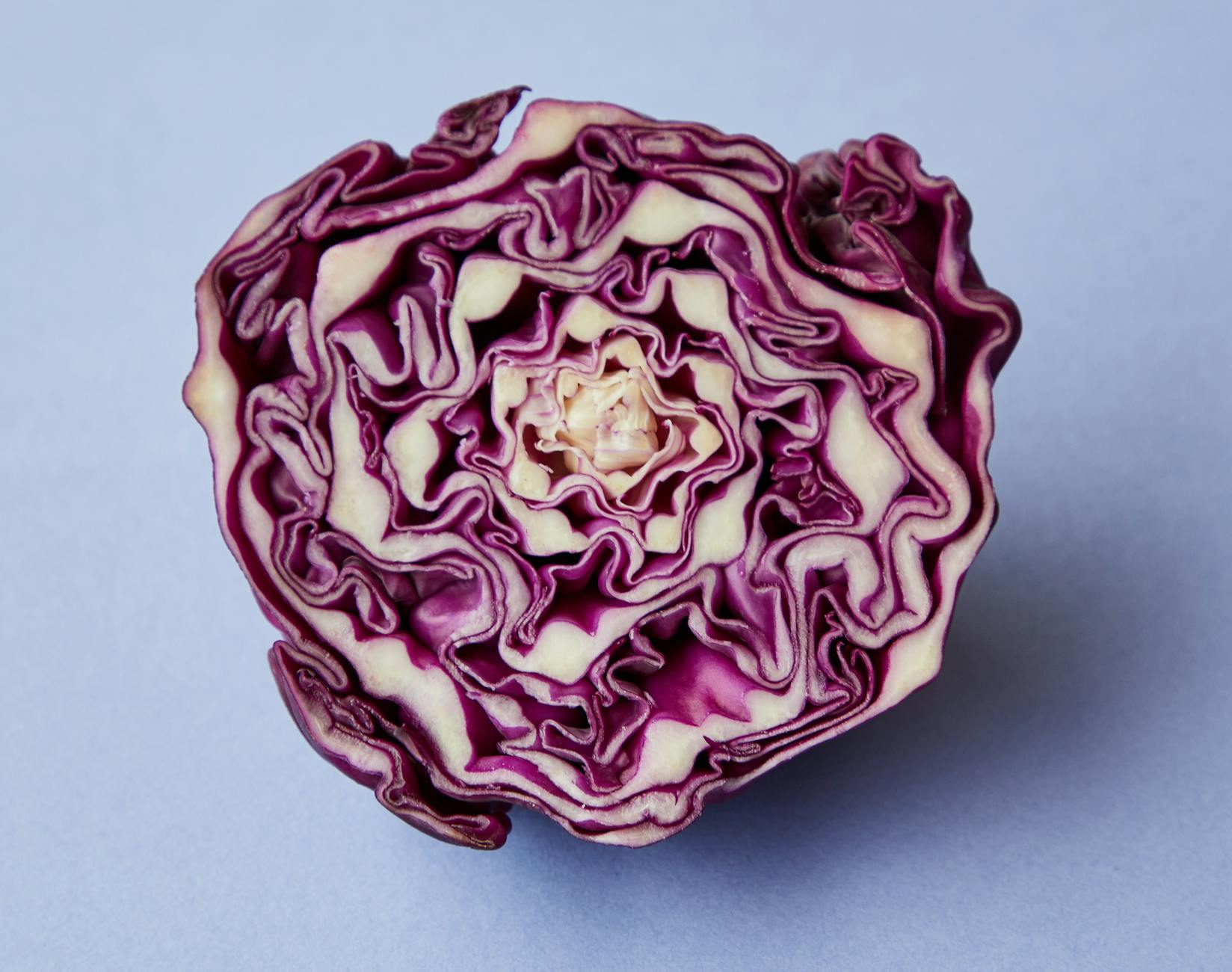
What is Sauerkraut?
Sauerkraut is a very basic and simple vegetable ferment, which I highly recommend trying, no matter where you are in your fermentation journey.
It is composed of only two ingredients: salt and cabbage. The salt is massaged into the cabbage, which draws out water and creates a brine. The cabbage is then left to sit in this brine and ferment at room temperature for anywhere from 5 days to 3 months, or longer.
Why should I make Sauerkraut?
If you are new to fermented foods or if you’ve only had store bought sauerkraut, you may have experienced it as a bit odd or flavorless. You might wonder why you would want to make it at home.
Well, sauerkraut is a lacto-fermented food. Lacto-fermented foods are a wonderful source of probiotics, vitamins, and minerals. Sauerkraut itself is a source of vitamins A, B, C, and K (checkout this article for more info). Additionally, homemade sauerkraut is significantly more flavorful (and healthful) than any you can buy in store or get with your Costco hotdog.
Sauerkraut is one of the very first fermented foods I ever experimented with. It is very simple to make, it doesn’t require any special equipment, and it is easy to add spices or other ingredients so that you can create a ferment that is perfectly suited to your taste. It is a perfect starting point if you are brand new to the world of fermented foods.
How does one eat Sauerkraut?
Probiotics are an important addition to every person’s diet and sauerkraut is a very easy and affordable way to get them in. I like to serve sauerkraut as a side with almost any meal, breakfast, lunch, or dinner.
I especially enjoy it in a breakfast bowl with potatoes, eggs, and bacon. It’s also delicious mixed into any type of rice bowl or served alongside a meat and potatoes type of meal. Sometimes I even add it into my soups (although heat does diminish the probiotic benefits).
Things to Know
The most important part of making Sauerkraut is the ratio of salt to cabbage. If you do not use enough salt, the wrong kind of bacteria will proliferate or mold may grow and your sauerkraut will not turn out. Conversely, using too much salt can hinder the production of the bacteria needed to facilitate the fermentation process.
The general rule for making sauerkraut is to use a 2% ratio of salt to cabbage. This means that the amount of salt you use should be equal to 2% of the weight of the cabbage you are using. So for each 100 grams of cabbage you will add 2 grams of salt. Or, for each pound of cabbage you will use 1.5 teaspoons of salt.
Don’t use salt that has added iodine or any anti-caking agents as these can impede or prevent fermentation. You can use any type of salt that does not contain these items. I typically just use plain sea salt.
Making fermented foods is more of an art than a science, and there many various methods and traditions to do so. The amount of salt you use, the temperature of your house, and the amount of time you ferment your cabbage will all have an impact on the final product, but it is really hard to mess this up. If you’d like to learn more about the great variety of ways that you can ferment foods, the book The Art of Fermentation by Sandor Ellix Katz is a great resource.
My Sauerkraut Method
Ingredients & Tools:
- 1-2 Heads of Cabbage – I generally aim for about 5 lbs and I like to do purple and green together, but you can do one or the other.
- Sea Salt (or other salt, as long as it is free of iodine and anti-caking agents)
- 2 Quart Size Mason Jars (or 1 half gallon)
- Scale – If you do not have a scale, take note of the weight of your cabbage while at the store, or check your receipt as the weight is often noted on there.
- Cutting Board
- Knife
- Large Bowl
- Shallow Dish – For the jars to sit in while the cabbage ferments, as liquid tends to seep out.
- Optional:
- Pickle pounder – Helps to pack your sauerkraut into the jar tightly.
- Fermentation weights – These hold your vegetables under the brine so that they do not spoil or mold. If you don’t have these, you can use rocks in a Ziplock bag, a smaller jar that fits in the mouth of your jar, or a cabbage core wrapped in a cabbage leaf, which gets discarded later (this is what I did until I got weights).
- Fermentation lids – There are many varieties of these, and they all have their pros and cons, but I personally prefer pickle pipe lids.
How to Make Sauerkraut:
- Begin by rinsing away any dirt or grime on the cabbage. Remove a couple of the outer leaves and set aside to use later. Cut cabbage in quarters vertically and remove the core, set aside with the outer leaves. Then, either chop the cabbage quarters horizontally into about one inch strips, dice it finely, or use a food processer to shred it. Experiment and see which texture you prefer.
- Next, you will need to determine how much salt to use. There are two methods for this:
- You can either measure your cabbage in grams by placing the bowl onto your scale (make sure it is in the “grams” function) and pressing the “tare” button, then adding the chopped cabbage into the bowl and noting the weight. Calculate how much salt to use by multiplying the total cabbage weight by .02.
- Or, if you know the weight of your cabbage in pounds, use 1.5 teaspoons of salt for each pound of cabbage.
- Next, sprinkle salt over the cabbage in your bowl and massage the salt into the cabbage using your hands for about five minutes. Set aside for 15 minutes, allowing the salt to draw water out of the cabbage creating a brine. After fifteen minutes massage once more to ensure that there is plenty of liquid.
- Then, pack the cabbage tightly into jars, pushing down each scoop with either your hands or a pickle pounder. Leave a few inches of space at the top of the jar.
- Add your weight (fermentation weight or the reserved cabbage cabbage cores wrapped in leaves) on top and pour in any extra brine to ensure that all of the cabbage is covered. Leave some space between the liquid and the lid. Loosely screw on the lids so that gas is able to escape, or use fermentation lids if you have them. Place jars into the shallow dish to catch any liquid that escapes as a result of fermentation.
- After a few days you should note little bubbles rising in your jar and some liquid seeping out. Make sure that the cabbage remains under the liquid for the duration of the fermentation period, topping off with leftover brine or filtered water if needed. After about five days, open the jar and taste the cabbage below your weight. If it is still salty, replace the lid and wait a few more days before tasting again.
- When your cabbage is no longer salty and has reached your desired fermentation level, remove the fermentation weight and store your sauerkraut in the refrigerator. I prefer the taste after 1-2 weeks of fermentation, but some people like to wait even longer.
- Enjoy!
Once you make this simple recipe, try creating some variations by adding other vegetables such as carrots, onions, garlic, or jalapenos. You can also add spices, such as caraway seeds, paprika, or turmeric. I’ve even heard that adding apples gives it a lovely savory sweet combo.
Have you made sauerkraut before? What variations do you like? Share your experience in the comments below!
Recipe Card
Sauerkraut
A simple and delicious vegetable ferment, great for those just beginning to experiment with food fermentation.
Ingredients & Tools
- 1-2 heads of cabbage (purple, green, or both)
- Salt (free of iodine and anti-caking agents)
- 1-2 Quart size mason jars with lids
- Scale
- Cutting Board
- Knife
- Large Bowl
- Shallow Dish
Directions
- Prepare the Cabbage: Rinse away any dirt or grime on the cabbage. Remove outer leaves and set aside to use later. Cut cabbage in quarters vertically and chop out the core, set aside with the reserved leaves. Chop cabbage quarters horizontally into about one inch strips (see note).
- Determine Salt Amount: Place your bowl onto your scale and press the “tare” button, add the cabbage into the bowl and note the weight. Calculate how much salt to use by taking the total cabbage weight and multiplying by .02. Or, use 1.5 teaspoons of salt per pound of cabbage.
- Create Brine: Sprinkle salt over the cabbage and massage using your hands for a couple of minutes. Set aside for 15 minutes, allowing the salt to draw water out of the cabbage to create the brine. After fifteen minutes massage once more to ensure that there is plenty of liquid.
- Jar: Pack cabbage tightly into jars, leaving a few inches of space at the top of the jar. Place fermentation weights on top, or wrap the cabbage cores in the reserved cabbage leaves and use these to weigh down the chopped cabbage, ensuring that all of the cabbage is covered in brine. Pour any extra brine on top, but leave some space between the liquid and the lids. Loosely screw on the lids so that gas is able to escape, or use fermentation lids if you have them. Place jars into the shallow dish to catch any liquid that escapes as a result of fermentation.
- Wait: After a few days you should note little bubbles rising in your jar and some liquid seeping out. Make sure that the cabbage remains under the liquid, topping off with leftover brine or filtered water if needed. After about five days, taste some of the cabbage below the weight. If it is still salty, replace the weight and lid and wait a few more days before tasting again.
- Enjoy: When your cabbage is no longer salty and has reached your desired fermentation level, remove the weight and keep your sauerkraut in the refrigerator.
- Notes:
- Alternatively, you can use a food processor to get the cabbage in very small pieces. Experiment and see what size you prefer.
- Sauerkraut is fermented and thus preserved, however it will continue to slowly ferment if left at room temperature, so it is advisable to keep it in the refrigerator once it has reached your desired taste.
- Any cabbage that is not covered in brine should not be consumed as there is a risk of spoilage.
- Fermentation weights and lids are not necessary to make sauerkraut, but they are helpful if you do so often.
- Some great additions to sauerkraut include apples, carrots, onions, jalapenos, garlic, caraway seeds, or turmeric.
Subscribe for more recipes straight to your inbox!
 Simple Sustainable Sovereign
Share your thoughts